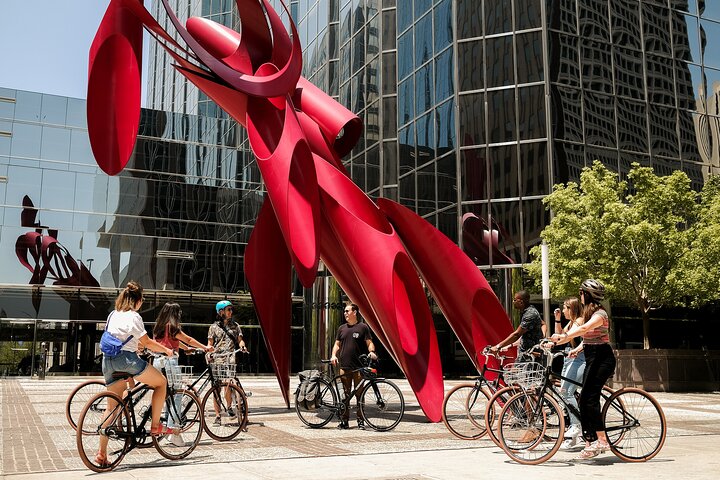
Things to Do in Oklahoma City
Where Monday mornings smell like cattle and Saturday nights sound like jazz
Plan Your Trip
Essential guides for timing and budgeting
Top Things to Do in Oklahoma City
Find activities and tours you'll actually want to do. Book through our partners — no booking fees.
Explore Oklahoma City
Bricktown Entertainment District
Landmark
Many Botanical Gardens
Landmark
National Cowboy And Western Heritage Museum
Landmark
Oklahoma City National Memorial And Museum
Landmark
Oklahoma State Capitol
Landmark
Many Botanical Gardens
Landmark
Oklahoma City Zoo And Botanical Garden
Landmark
Your Guide to Oklahoma City
About Oklahoma City
The Oklahoma National Stockyards has been running Monday cattle auctions since 1910, and on a winter morning the smell of livestock, sawdust, and coffee drifting down Exchange Avenue will reach you before you've even parked the car. Real buyers sit in genuine wooden bleachers while a fast-talking auctioneer moves through a hundred head of cattle in twenty minutes — admission is free, and this may be the only working livestock auction most visitors ever attend, in a neighborhood that also contains a proper honky-tonk and a western boot shop the size of a warehouse. Drive northeast into Bricktown and the mood changes completely: converted brick warehouses now hold oyster bars, rooftop terraces, and a canal where water taxis ($10 per person) run on warm evenings between buildings that stored cotton a century ago. The Oklahoma City National Memorial, west of Bricktown on 5th Street, is the most emotionally serious outdoor space in the American interior — 168 empty bronze chairs, a reflecting pool, the preserved wall of the building across the street still marked by the blast. Most visitors spend an hour and leave more quietly than they arrived. The honest limitation: this is a car city with sprawl that rivals Dallas, and getting between the Paseo Arts District, Midtown's restaurant corridor, and the Stockyards without a rental car means a series of rideshare rides that add up across an evening. The reward at the other end is a chicken-fried steak at Cattlemen's Steakhouse — beef from the stockyards down the road, white pepper gravy, a room unchanged since 1945 — for around $20. OKC has quietly become one of the more interesting food cities in the Southern Plains. The gap between the reputation and the reality is, right now, running in your favor.
Travel Tips
Transportation: Renting a car is the honest recommendation for anyone staying more than a night — OKC's neighborhoods are spread across distances that make rideshare bills add up fast after dark. That said, the EMBARK downtown streetcar runs a useful loop connecting Bricktown, downtown, and Midtown for $1 per ride (or $3 for a day pass), and is worth using on evenings when you plan to drink and not drive. Parking tends to be cheap and plentiful — $5–8 for surface lots around Bricktown on most weekends — but avoid driving into Bricktown on Thunder home-game nights unless you enjoy sitting still. Download either Lyft or Uber before you arrive; both work reliably here and usually show a car within five minutes.
Money: Oklahoma's overall cost of living runs noticeably below the national average, and that gap shows clearly in hotel and restaurant prices. A hotel room that would run $300 in Chicago or Boston tends to run $150–180 here for comparable quality. Credit cards are accepted almost universally, including in the Stockyards City western wear shops. Tipping follows US standard: 18–20% at sit-down restaurants, $1–2 per drink at bars. Oklahoma City sales tax currently sits around 8.6%, which appears on every receipt. Cash is worth keeping on hand for street-food vendors at Paseo Arts District gallery walks and the occasional cash-only bar. No currency exchange needed — it is USD throughout, with no hidden fees for domestic travelers.
Cultural Respect: Oklahoma has the highest Native American population of any US state, and both the Oklahoma History Center and the American Indian Cultural Center south of downtown take this history seriously — and so should you. At the Oklahoma City National Memorial, skip the selfie-first approach; people lost family members there in 1995, and locals notice visitors who treat it as a backdrop. The Stockyards City ranchers and cattle buyers are conducting actual commerce during the Monday auctions — watching is welcome, getting in the way is not. Oklahoma hospitality tends to be genuine rather than performative: if someone at a Midtown bar asks where you're from, they are curious. Respond in kind and the conversation will go somewhere interesting.
Food Safety: The food safety risk at established OKC restaurants is minimal. The more common practical error is confining yourself to Bricktown, which skews toward the reliable and tourist-priced. The more interesting eating — and the better value — tends to happen in the Paseo Arts District, the Plaza District on NW 16th Street, and along the Automobile Alley corridor. Chicken-fried steak is the dish to understand here: a thin beef cutlet, breaded, fried, served with white peppercorn gravy that is sharper and more complex than brown gravy in ways worth experiencing firsthand. Ann's Chicken Fry House on N. Western Avenue has been doing it since 1971 and remains the benchmark. For vegetarian or vegan travelers, OKC's food scene has grown enough that options are now available rather than grudgingly offered.
When to Visit
Oklahoma City's weather demands honest planning, and the single most important variable is tornado season. The Southern Plains storm window runs from roughly late March through May, and while the odds of encountering a tornado on any given day are relatively low, the weather pattern during this period — fast-moving supercell thunderstorms, hail the size of golf balls, pressure drops that arrive with almost no warning — creates a backdrop that ranges from thrilling to dangerous. If severe weather activates real anxiety, it is worth avoiding April and May entirely. Spring (April–May), when the storms spot't shown up yet that week, is likely the most comfortable season for outdoor exploring: temperatures around 65–75°F (18–24°C), the Myriad Botanical Gardens in downtown filled with color, and Bricktown's patios making sense. The Oklahoma City Memorial Marathon in late April draws runners from across the country. Hotel prices in spring run at their peak — expect $160–200 per night for a decent downtown property — but the city tends to be at its most alive. Travelers who can monitor weather apps and stay flexible about plans will likely find spring rewarding. Summer (June–August) is straightforward: it is hot, in the specific way that the Southern Plains is hot. Sustained highs of 95–105°F (35–40°C) are standard by July, and humidity pushes the felt temperature higher still. Outdoor sightseeing concentrates in the early morning hours before 10 AM and evenings after 7 PM; midday belongs to the city's air-conditioned interiors, which are worth the time. The National Cowboy and Western Heritage Museum on NE 63rd Street is the most impressive museum in Oklahoma, and the Oklahoma History Center downtown can fill a full afternoon without a hint of boredom. Hotel prices drop 25–35% below spring peak in July and August, and popular sites thin noticeably. Fall (September–October) is the sweet spot for most visitors. September still carries summer heat — highs around 80–90°F (27–32°C) — but the storm anxiety has dropped and the air starts to lose its weight. October is probably the clearest and most comfortable month: highs of 65–75°F (18–24°C), lows cool enough for a jacket at night, and the river parks showing real fall color. The State Fair of Oklahoma runs late September through mid-October at the fairgrounds north of downtown and pushes hotel prices 30–40% above normal; book far ahead or plan around it entirely. The Red Earth Native American Cultural Festival in late September is worth building a trip around if the dates align. Winter (November–February) is quiet and often cold — 35–55°F (2–13°C) in November, dropping to 30–45°F (−1–7°C) in January and February. Ice storms are the real hazard: OKC roads are not treated the way northern cities handle ice, and a single overnight freeze can make driving treacherous. Budget travelers who pack appropriately and can tolerate the cold will find hotel rates at their annual floor — often $90–120 per night for rooms that run $180 in April — museums completely uncrowded, and an authentically off-season version of the city. December brings Christmas lights and a skating rink to Bricktown that make the district worth a cold evening walk. The broad recommendation for a first visit is probably October: clear skies, comfortable temperatures, an active events calendar, and prices that have dropped from the summer heat without yet climbing back to spring levels. Come back in April if you want the full Oklahoma experience — storms included.
Oklahoma City location map
Frequently Asked Questions
What should I know about Oklahoma City, OK, USA?
Oklahoma City is the capital and largest city of Oklahoma, located in the central part of the state with a metro population of about 1.4 million. The city is known for its Western heritage, the National Cowboy & Western Heritage Museum, Bricktown entertainment district, and the Oklahoma City National Memorial. You'll find a mix of cowboy culture, modern amenities, and a growing food scene, with lower costs compared to most major U.S. cities.
How far is Tulsa, Oklahoma from Oklahoma City?
Tulsa is about 106 miles northeast of Oklahoma City, roughly a 1 hour and 45 minute drive via the Turner Turnpike (I-44). Many visitors do day trips between the two cities, though Tulsa has its own attractions like the Philbrook Museum and Gathering Place park. We recommend budgeting about $5-6 in tolls each way if you're driving.
What is Frontier City theme park like?
Frontier City is Oklahoma City's main amusement park, located in northeast OKC with a Wild West theme and over 30 rides including several roller coasters. The park is typically open weekends in spring and fall, and daily during summer months, with admission around $40-50 per person (prices vary by season). It's a good option for families and is more affordable than larger theme parks, though it's smaller in scale than destinations like Six Flags.
Is there a Prague near Oklahoma City?
Yes, Prague is a small town in Oklahoma located about 50 miles east of Oklahoma City with a population around 2,400. It was founded by Czech immigrants in 1902 and celebrates its heritage with the annual Kolache Festival each May, featuring traditional Czech pastries and culture. If you're searching for Prague, Czech Republic, that's a different destination entirely in Central Europe.
What should I know about the Oklahoma City National Memorial?
The Oklahoma City National Memorial honors the 168 people killed in the 1995 bombing of the Alfred P. Murrah Federal Building. The outdoor memorial is free to visit and features 168 empty chairs, the Gates of Time, and a reflecting pool, while the adjacent museum (admission around $15) provides detailed exhibits about the event and its aftermath. It's located in downtown Oklahoma City and is a moving, thoughtfully designed tribute that typically takes 1-2 hours to experience fully.
Find More Activities in Oklahoma City
Explore tours, day trips, and experiences handpicked for Oklahoma City.